Best for this need

Best Mesh Wi-Fi Systems for Large Multi-Story Homes

Large-home Wi-Fi depends on placement, construction, interference, and backhaul—not only a coverage number. This guide compares multi-node systems suited to broader and multi-story layouts.

  • By
  • Updated October 11, 2026
  • Data-driven recommendation

At a glance

Decision summary

Leading recommendation
TP-Link Deco BE63 3-Pack
Need-specific match
100%
Evidence confidence
High
Recommendations
6
Criteria considered
3

Ranked for this need

Recommended products

6 recommendations

Ordered by fit for this page’s stated requirements and preferences. Match scores are need-specific, not universal product ratings.

BestByNeed may earn a commission from qualifying purchases. This does not affect recommendation scores.

Strong Match

TP-Link Deco XE75 Pro 3-Pack

TP-Link Deco XE75 Pro 3-Pack

Best for

  • Mesh wifi coverage sqft
  • Mesh wifi pack count
  • Mesh wifi wired backhaul

Evidence confidenceHigh

Match
100 / 100
Preferences considered
2
Relevant data coverage
100 / 100
Evidence confidence
95 / 100

Strong Match

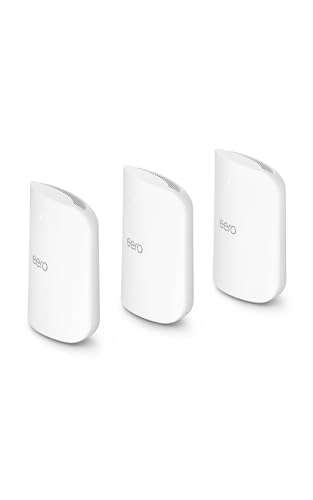
eero Max 7 3-Pack

eero Max 7 3-Pack

Best for

  • Mesh wifi coverage sqft
  • Mesh wifi pack count
  • Mesh wifi wired backhaul

Evidence confidenceHigh

Match
100 / 100
Preferences considered
2
Relevant data coverage
100 / 100
Evidence confidence
95 / 100

Strong Match

NETGEAR Orbi 770 Series 3-Pack

NETGEAR Orbi 770 Series 3-Pack

Best for

  • Mesh wifi coverage sqft
  • Mesh wifi pack count
  • Mesh wifi wired backhaul

Evidence confidenceHigh

Match
100 / 100
Preferences considered
2
Relevant data coverage
100 / 100
Evidence confidence
95 / 100

Strong Match

NETGEAR Orbi 970 Series 3-Pack

NETGEAR Orbi 970 Series 3-Pack

Best for

  • Mesh wifi coverage sqft
  • Mesh wifi pack count
  • Mesh wifi wired backhaul

Evidence confidenceHigh

Match
100 / 100
Preferences considered
2
Relevant data coverage
100 / 100
Evidence confidence
95 / 100

Strong Match

ASUS ZenWiFi BQ16 Pro 2-Pack

ASUS ZenWiFi BQ16 Pro 2-Pack

Best for

  • Mesh wifi coverage sqft
  • Mesh wifi wired backhaul
Skip it ifMesh wifi pack count

Evidence confidenceHigh

Match
52 / 100
Preferences considered
2
Relevant data coverage
100 / 100
Evidence confidence
95 / 100

Who this recommendation is for

A coverage claim cannot see concrete floors, metal ductwork, radiant barriers, neighboring networks, or the location of the internet connection. A good large-home mesh plan uses enough nodes to create strong links without placing them so far apart that each satellite repeats a weak signal.

This comparison starts with a manufacturer-stated coverage figure of at least 7,000 square feet and favors three-node packs plus wired backhaul. Coverage remains an estimate rather than a guarantee; placement and the building determine the final result.

How we compare these products

We apply the durable requirements described on this page to the same deterministic recommendation pipeline used by the Finder. Product facts come from the canonical catalog and linked evidence. Amazon may provide marketplace identity, images, availability, and a fresh offer, but it does not determine rank.

Backhaul quality shapes the whole system

Ethernet backhaul can give nodes a predictable connection when cabling exists. Wireless backhaul needs thoughtful spacing and may share radio capacity with client traffic.

More nodes are not always better

Extra nodes placed too close can create interference or roaming complexity. Begin with a layout plan and adjust using measured signal and real device behavior.

Ethernet at each node adds flexibility

Ports can connect a switch, TV, console, office equipment, or wired backhaul. Check speed and whether the port can act as WAN or LAN on every unit.

Important trade-offs

  • Three-node kits cost more and require more outlets than a router or two-pack.
  • Manufacturer coverage figures vary in test assumptions and do not predict every house.
  • Advanced security or parental controls may place some features behind an optional subscription.

Buying checklist

  • Map floors, construction obstacles, dead zones, and available Ethernet.
  • Place nodes in open areas with a strong upstream link.
  • Count high-demand wired and wireless devices by location.
  • Check management, subscription, and ISP compatibility before switching.

Bottom line

Design the node and backhaul layout around the building. The best large-home mesh kit is the one that provides strong links between nodes and useful connections where devices actually live.

Refine the shortlist

Need something more specific?

Add your budget, must-have features and personal priorities in Finder.

Personalize these recommendations

Common questions

Frequently asked questions

How many mesh nodes does a large home need?

It depends on layout and materials more than square footage alone. A three-pack is a planning starting point, not a rule; measure and reposition before adding nodes.

Is wired backhaul worth it?

It can improve consistency and preserve wireless capacity when Ethernet is practical. Port speed and cabling quality should match the internet and local-network goals.

Will mesh increase my internet speed?

It can improve the connection to distant devices, but it cannot make the ISP service faster than the subscribed link. Client capability and network congestion also matter.

Transparent recommendations

Research basis

Recommendations use structured product facts, this page’s stated criteria and supporting evidence. Marketplace data never determines rank by itself.

How we evaluate products
Products in this recommendation set
6
Brands represented
4
Criteria considered
3
Editorial accountabilityVince Le · October 11, 2026