Best for this need

Best Portable Power Stations for Fast Solar Charging

Solar input can extend off-grid use or outage resilience, but the port rating is only one piece of the system. We compare models accepting at least 500W and explain panel, voltage, weather, and capacity trade-offs.

  • By
  • Updated October 11, 2026
  • Data-driven recommendation

At a glance

Decision summary

Leading recommendation
EcoFlow DELTA 3 Plus
Need-specific match
100%
Evidence confidence
High
Recommendations
5
Criteria considered
3

Ranked for this need

Recommended products

5 recommendations

Ordered by fit for this page’s stated requirements and preferences. Match scores are need-specific, not universal product ratings.

BestByNeed may earn a commission from qualifying purchases. This does not affect recommendation scores.

Best Overall Match

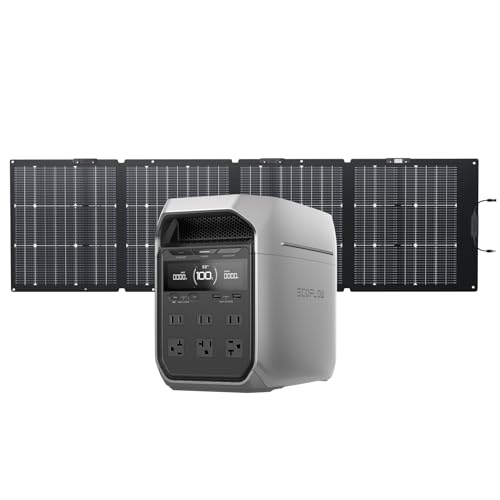
EcoFlow DELTA 3 Plus

EcoFlow DELTA 3 Plus

Best for

  • Power station solar input w
  • Power station capacity wh
  • Power station chemistry

Evidence confidenceHigh

Match
100 / 100
Preferences considered
2
Relevant data coverage
100 / 100
Evidence confidence
95 / 100

Strong Match

EcoFlow DELTA 2 Max

EcoFlow DELTA 2 Max

Best for

  • Power station solar input w
  • Power station capacity wh
  • Power station chemistry

Evidence confidenceHigh

Match
100 / 100
Preferences considered
2
Relevant data coverage
100 / 100
Evidence confidence
95 / 100

Strong Match

Jackery Explorer 2000 Plus

Jackery Explorer 2000 Plus

Best for

  • Power station solar input w
  • Power station capacity wh
  • Power station chemistry

Evidence confidenceHigh

Match
100 / 100
Preferences considered
2
Relevant data coverage
100 / 100
Evidence confidence
95 / 100

Strong Match

Anker SOLIX C1000

Anker SOLIX C1000

Best for

  • Power station solar input w
  • Power station capacity wh
  • Power station chemistry

Evidence confidenceHigh

Match
100 / 100
Preferences considered
2
Relevant data coverage
100 / 100
Evidence confidence
95 / 100

Who this recommendation is for

A high solar-input rating can shorten recharge time only when the panel array, voltage window, connectors, sun conditions, and battery state let the station use it. A small panel will not become faster simply because the power station accepts more, and real output is normally below the label rating for part of the day.

We require a documented solar input of at least 500W, then favor LiFePO4 chemistry and at least 1,000Wh of capacity. This creates a comparison for car camping, mobile work, and selected outage loads where renewable recharging matters more than minimum carry weight.

How we compare these products

We apply the durable requirements described on this page to the same deterministic recommendation pipeline used by the Finder. Product facts come from the canonical catalog and linked evidence. Amazon may provide marketplace identity, images, availability, and a fresh offer, but it does not determine rank.

Input rating must match the array

Check the supported voltage, current, connector, and series-or-parallel rules before buying panels. Exceeding electrical limits is unsafe even when nominal panel watts look acceptable.

Capacity determines how much sun is useful

A larger battery can absorb more daily energy and run larger loads, but it also needs a bigger array or more hours to recharge. Match the array to both the station and the load plan.

Chemistry and expansion affect long-term use

LiFePO4 and supported expansion are valuable for frequent cycling or growing needs, while weight and ecosystem cost may matter more for occasional travel.

Important trade-offs

  • High solar acceptance often comes with a heavier, higher-output station.
  • Panels capable of approaching the input limit add cost, storage volume, setup time, and weather exposure.
  • Manufacturer charge-time examples rely on favorable conditions and should not be treated as guaranteed field results.

Buying checklist

  • Verify solar voltage and current windows, not only wattage.
  • Plan panel area, orientation, security, and weather protection.
  • Estimate daily energy use before choosing battery and array size.
  • Confirm whether cables and adapters are included with the current bundle.

Bottom line

Choose the station and panel array as one electrical system. Fast solar charging is useful when input limits, battery size, daily loads, and real panel placement all agree.

Refine the shortlist

Need something more specific?

Add your budget, must-have features and personal priorities in Finder.

Personalize these recommendations

Common questions

Frequently asked questions

Will a 500W panel always charge at 500W?

No. Temperature, angle, shade, clouds, controller limits, cable loss, and battery state affect input. Panel ratings are measured under standardized conditions.

Can I connect third-party solar panels?

Often, if connector and electrical specifications are compatible. Follow the power-station manufacturer’s supported voltage, current, polarity, and wiring guidance.

Is solar charging useful during a home outage?

It can extend selected loads when outdoor conditions and safe panel placement permit. It should be planned as a variable energy source, not guaranteed daily production.

Transparent recommendations

Research basis

Recommendations use structured product facts, this page’s stated criteria and supporting evidence. Marketplace data never determines rank by itself.

How we evaluate products
Products in this recommendation set
5
Brands represented
4
Criteria considered
3
Editorial accountabilityVince Le · October 11, 2026