An automatic feeder for two cats sounds like a simple problem: buy a machine with two bowls and let it split dinner. That can work beautifully when both cats eat the same food, need similar portions and are genuinely comfortable eating beside each other. It can also fail in a very predictable way. The feeder may divide the kibble into two neat piles while one cat still eats from both.
A shared dual-bowl feeder is a convenience solution for two cats that can already share food calmly. If one cat steals meals, needs a different diet, eats much faster, grazes slowly or requires tighter portion control, the real problem is not bowl count. It is access. In that situation, separate feeding stations or identity-controlled feeders are usually the more logical design.
Two bowls solve distribution. They do not solve ownership.
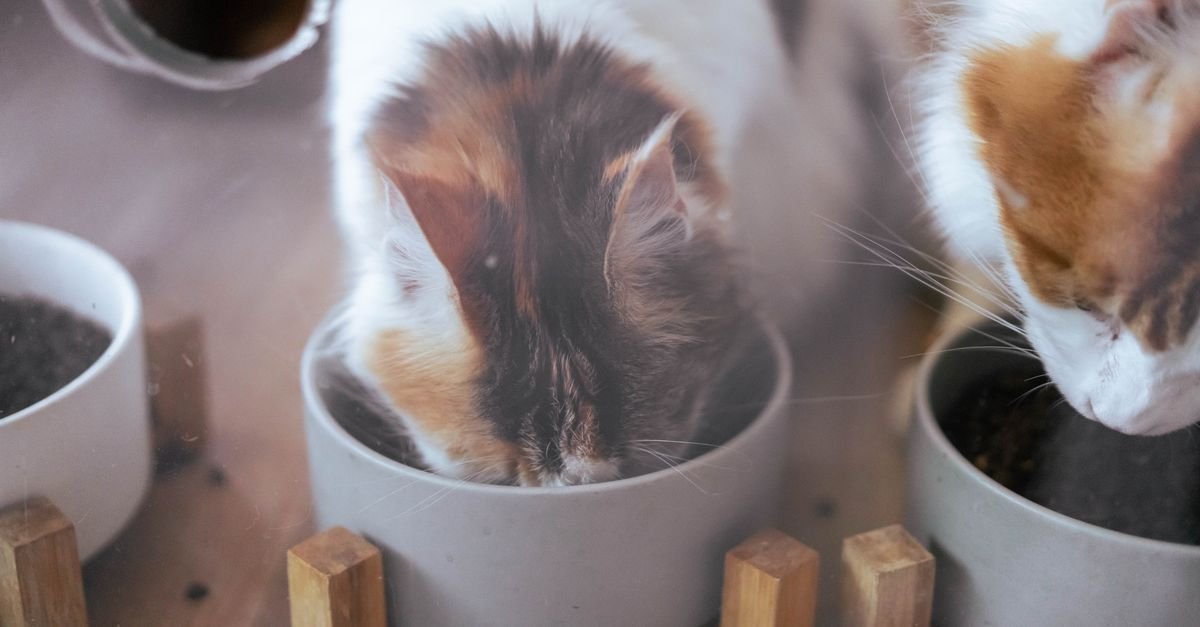
This is the distinction I would make before comparing apps, hopper size or camera resolution. A typical dual-bowl automatic feeder has one hopper and one dispensing mechanism. Food drops through a splitter and reaches two bowls. Mechanically, that is efficient. Socially, both bowls are still available to both cats.
If the cats eat at roughly the same speed and have no reason to guard food, that may be all you need. Current products such as WOPET’s Heritage line are explicitly sold as dual-bowl feeders for two pets, while oneisall currently markets a 5 L two-cat feeder with two bowls, battery backup and scheduling. You can check the manufacturer’s current details on WOPET's current dual-bowl feeder page and oneisall's current two-cat feeder specifications.
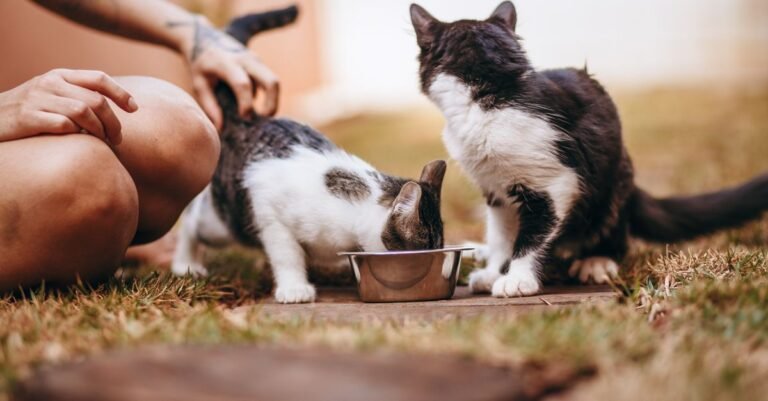
But a bowl splitter cannot recognize which cat is standing in front of it. It cannot stop the faster cat from finishing one side and moving to the other. It cannot protect a prescription diet. And it cannot make two cats feel comfortable eating shoulder to shoulder if they would rather have space.
That is why I would not begin the buying decision with “How many bowls does it have?” I would begin with “Do these two cats actually have the same meal?”
The easiest two-cat household is the one where both cats need the same thing
Imagine two adult cats that eat the same dry food, have similar daily allowances and already eat side by side without rushing each other. In that household, a dual-bowl feeder is attractive because it keeps the hardware simple. There is one hopper to refill, one schedule to maintain and one machine taking up floor space.
It is also the setup where the usual feeder features matter most: how many meals can be scheduled, whether the machine handles the kibble size you use, how easy the bowl assembly is to wash, whether the food path jams, and what happens if power or Wi-Fi disappears.
If you are comparing that type of feeder, browse dual-bowl automatic feeders for two cats on Amazon. I would treat “feeds two cats” as a starting point, not proof that each cat will receive exactly half of what was dispensed. Watch a few real meals after setup. The cats will tell you more about the success of the arrangement than the product photo will.
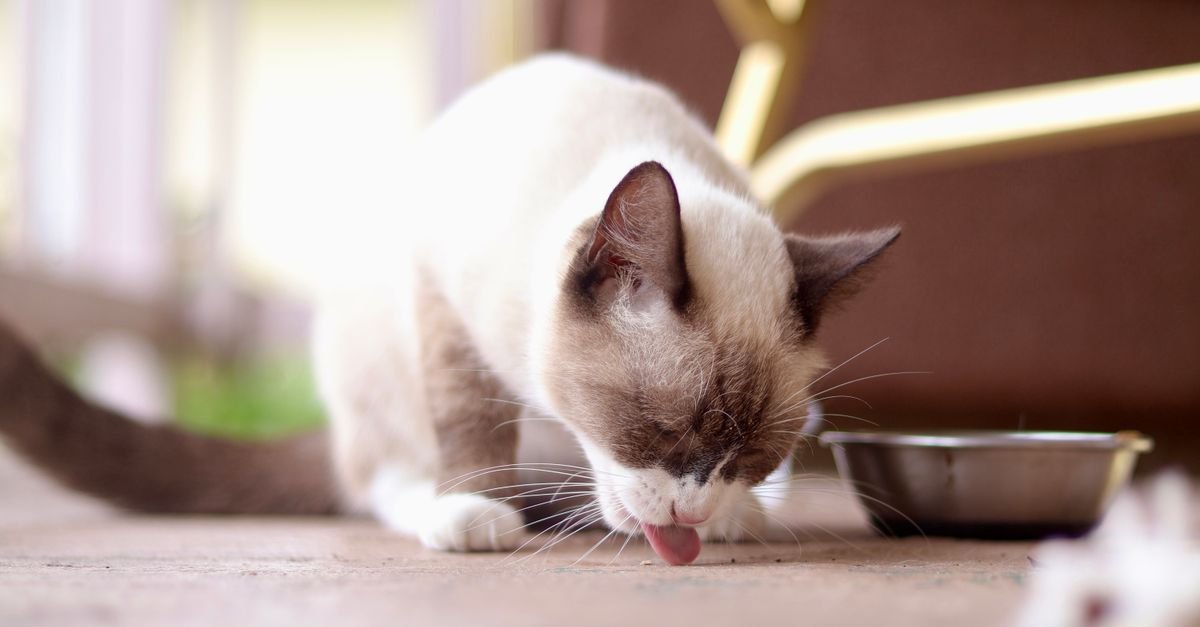
If one cat steals food, a dual bowl is usually the wrong architecture
Food stealing is often described as if it were a minor etiquette problem. From a product-selection point of view, it changes the entire design requirement. You no longer need one machine that creates two servings. You need a way to control which animal can reach which serving.
That is where RFID or microchip-controlled access becomes useful. PETLIBRO’s One RFID Smart Feeder, for example, verifies a dedicated collar tag before unlocking access. The manufacturer currently states that the feeder synchronizes with a single collar tag, and its multi-pet bundles are built around using multiple feeder units. PETLIBRO's current One RFID Smart Feeder specifications also makes an important distinction clear: this model reads PETLIBRO’s RFID collar tag, not an implanted microchip.
For two cats that need individually scheduled dry-food portions, that one-tag-per-feeder design is conceptually much closer to the problem you are trying to solve. Each cat can have its own station, schedule and access rule instead of competing for two open bowls connected to the same hopper.
You can compare RFID automatic feeders for multi-cat homes on Amazon, but verify the access method before buying. “RFID feeder,” “microchip feeder” and “smart feeder” are not interchangeable descriptions.
Microchip access is useful, but it is not always an automatic dispenser
SureFeed is a good example of why product labels can blur together. The current SureFeed Microchip Pet Feeder opens for an authorized animal using a compatible implanted microchip or SureFlap RFID collar tag. It is designed to stop other pets stealing food, supports both wet and dry food, and the manufacturer recommends giving each pet its own feeder in multi-pet households. You can verify those points on Sure Petcare's current Microchip Pet Feeder specifications.
What it does not do is turn a hopper into scheduled portions. Food is placed in the bowl, and the lid controls access. That can be exactly the right tool for a grazer, a cat eating wet food or a pet on a special diet. It is simply solving a different problem from a timed automatic dispenser.
If that is closer to your problem, you can browse microchip-controlled cat feeders on Amazon. Just remember to distinguish a feeder that controls access to food already in the bowl from one that automatically dispenses a fresh portion on a schedule.
This matters because a shopper searching for an automatic feeder for two cats may actually need two systems at once: scheduled delivery for one cat and controlled access for another. There is no rule saying both feeding stations have to be the same product type.
Different diets are where “one hopper, two bowls” stops making sense
If one cat eats a weight-management formula and the other does not, or one needs prescription food, a shared hopper cannot keep those diets separate. The same is true when one cat eats wet food while the other eats dry food, or when one animal needs a much smaller portion than the other.
At that point I would treat the cats as two separate feeding jobs. That may mean two automatic dispensers, two access-controlled bowls, or a mixed setup. It costs more and uses more floor space, but it matches the actual constraint instead of trying to force a shared feeder to do something it was never designed to do.
There is also a behavior reason not to assume that two cats should share one station. Cat Friendly Homes' current guidance on feeding cats currently advises giving each cat a separate feeding station with distance and visual separation in multi-cat homes. That guidance is about the feeding environment rather than feeder brands, and it is a useful reality check when product photos show two cats happily eating inches apart.
Watch the faster cat, not just the feeder
Two cats can eat the same food and still be poor candidates for a shared dual bowl. One may finish in thirty seconds while the other takes several minutes. One may walk away and come back. One may hover just behind the other without obvious fighting. The hardware can dispense perfectly and the feeding arrangement can still be unfair.
I would test this before spending extra on smart features. Put down two ordinary bowls with the portions you expect the feeder to serve and watch what happens over several meals. If each cat stays with its own bowl and finishes at a similar pace, a shared dispenser has a better chance of working. If one cat switches sides, blocks access or waits to clean up the other’s leftovers, identity-controlled access becomes much more valuable.
This is also where cameras can be genuinely useful rather than decorative. A camera-equipped feeder can show you what happened after dispensing, but remember the limitation: seeing one cat steal the other bowl does not prevent it. Monitoring is not access control.
Portion control needs to be defined per cat, not per machine
“Ten portions per meal” sounds precise until you ask what a portion means and where those portions end up. Manufacturers often define a portion as a small unit of dispenser output. With a two-bowl splitter, the setting may describe what the machine releases before the food is divided rather than a guaranteed serving measured independently in each bowl.
For healthy adult pets on the same food, you may only need the split to be reasonably consistent. For a cat whose intake needs close management, I would want to know exactly how the manufacturer defines the serving unit, whether both outlets receive food evenly with your kibble shape, and whether you can verify the result with a kitchen scale during setup.
Do not assume that an app slider turns a shared hopper into two independently measured diets. If separate portions are a hard requirement, separate dispensers are the cleaner solution.
Wet food changes the decision again
Most hopper-based automatic feeders are designed around dry kibble because it can move through an auger or dispensing wheel and sit in a storage tank. Wet food needs a very different approach: rotating trays, insulated compartments, refrigeration, ice packs or a sealed access bowl.
For two cats on wet food, I would be especially cautious about buying one shared device simply because it has multiple compartments. Ask whether the compartments are individual meals over time or simultaneous servings for two animals. Those are completely different layouts.
If both cats graze on wet food but need food protection, a microchip-controlled bowl may be more relevant than a timed dry-food feeder. If meals have to appear at scheduled times, look at tray or refrigerated systems and think about whether you need one per cat.
Backup power and offline behavior matter twice as much when one machine feeds two pets
A shared feeder creates convenience, but it also creates a single point of failure. If that one machine stops dispensing, both cats miss the meal. I would therefore give battery backup, local schedule retention and jam alerts more weight in a two-cat setup than I might for a feeder that supplements normal hand feeding.
Wi-Fi is only part of that reliability question. Many smart feeders can continue a schedule locally when the internet disappears, while remote changes, notifications and cameras go offline. our guide to what automatic feeders still do without Wi-Fi explains the distinction in more detail.
If you are going away, test the exact failure mode before relying on it. Disconnect the router. Unplug wall power if batteries are installed. Confirm what the feeder actually does rather than what you assume “backup” means.
One shared feeder can be cheaper, but two stations can be the better value
It is tempting to compare purchase prices only. One dual-bowl feeder is usually simpler and often cheaper than two identity-controlled units. But the cheapest machine is not good value if you still have to supervise meals, separate the cats manually or replace the feeder because the faster animal keeps stealing food.
I would think in terms of the problem you are paying to remove. If the goal is simply “feed two calm cats the same kibble at 6 a.m.,” a shared dual-bowl unit can be an elegant solution. If the goal is “make sure Cat A gets 45 grams of one food and Cat B cannot touch it,” you are buying access control, not just automation.
How I would choose the setup
If both cats eat the same dry food, need similar portions and already share feeding space comfortably, I would start with a dual-bowl automatic feeder and spend my attention on reliability, cleaning and portion behavior. If either cat steals food, grazes slowly, needs a different diet or requires tighter intake control, I would move directly to separate stations. RFID or microchip access then becomes more useful than adding another camera or a larger hopper.
From there, the remaining decision is practical. Do you need scheduled dispensing, controlled access, wet-food support, offline schedules, battery backup, feeding logs or a camera? Those requirements can be combined in different ways; there is no single “two-cat” feature that replaces them.
You can compare automatic pet feeders in the BestByNeed catalog. The category already separates feeding system type, portion control, supported food types, battery backup and selective-access modes, which makes it easier to compare products by the job they actually perform.
If your situation is more specific, use the BestByNeed Finder and describe it plainly: “two cats, same dry food, one eats too fast,” or “two cats, different diets, need scheduled feeding.” That gives the recommendation engine useful constraints instead of asking it to treat every two-cat household as the same problem.
For more decision-first articles like this one, the BestByNeed Buying Guides hub keeps the current pet-care and home-cleaning guides in one place.
Buy for the feeding relationship, not the bowl count.
A dual-bowl feeder can be a very good automatic feeder for two cats when the cats already eat the same food peacefully. It becomes the wrong tool when the real problem is food stealing, different diets, unequal portions or a cat that needs protected access. In those homes, two separate feeding stations—or identity-controlled access—solve the problem that two open bowls cannot.
Before buying, decide whether you need distribution or access control. That one distinction will eliminate more bad choices than comparing ten app screenshots.