The carafe looks like a small detail until the first pot sits for forty minutes. A glass carafe usually depends on a heated plate to keep coffee hot. A thermal carafe tries to hold heat inside the vessel instead. Both approaches can work well, but they create different trade-offs in taste over time, serving convenience, breakage risk, cleaning and how long you expect the coffee to wait before the last cup is poured.
Choose a thermal carafe if you routinely drink from one batch over a long morning, want to move the pot away from the brewer, or prefer keeping coffee hot without a heater plate. Choose a glass carafe if you usually serve most of the batch soon after brewing, want to see the remaining coffee at a glance, value a lighter vessel, or prefer a simple carafe that is easy to inspect and rinse. The more important question is not which material is universally better; it is how long your coffee sits before you finish it.
The real difference is how the coffee is kept hot after brewing
Thermal and glass carafes can sit under brewers that use very similar extraction systems. The carafe decision begins after the brew is complete.
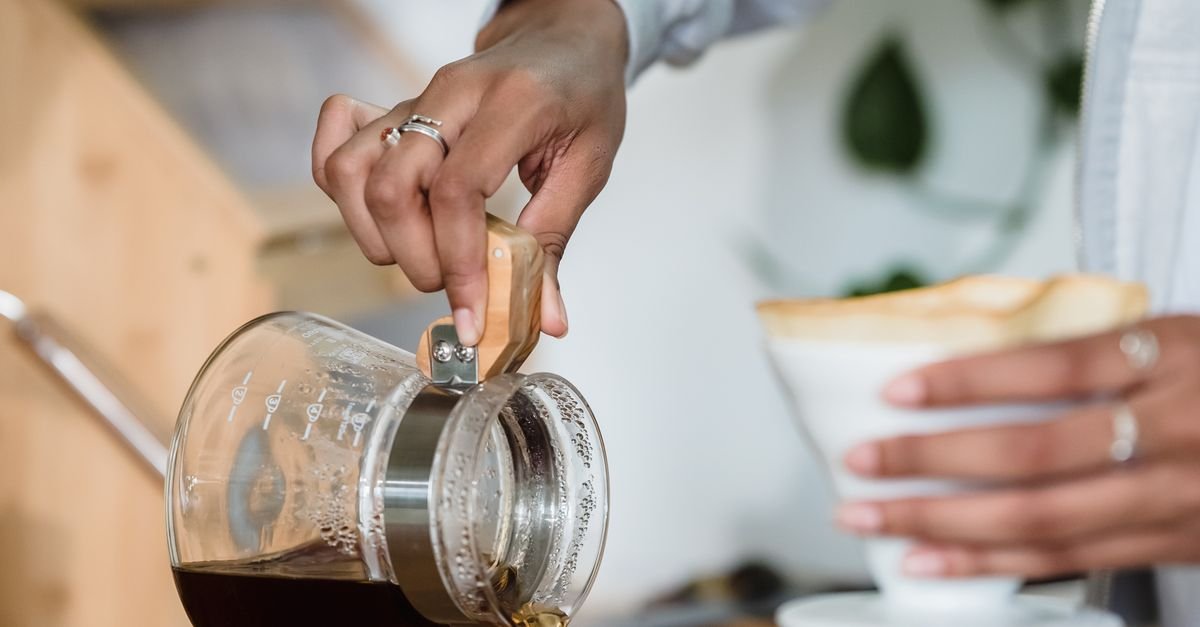
A glass carafe normally relies on a warming plate. That keeps the coffee at serving temperature by continuing to add heat from below. Moccamaster’s current KBGV Select, for example, uses a glass carafe on a hot plate and automatically shuts the brewer off after 100 minutes. Breville’s current Luxe Brewer Glass takes the same basic approach in a more extended form: its integrated heater plate is specified to keep coffee warm for up to six hours at about 175°F.
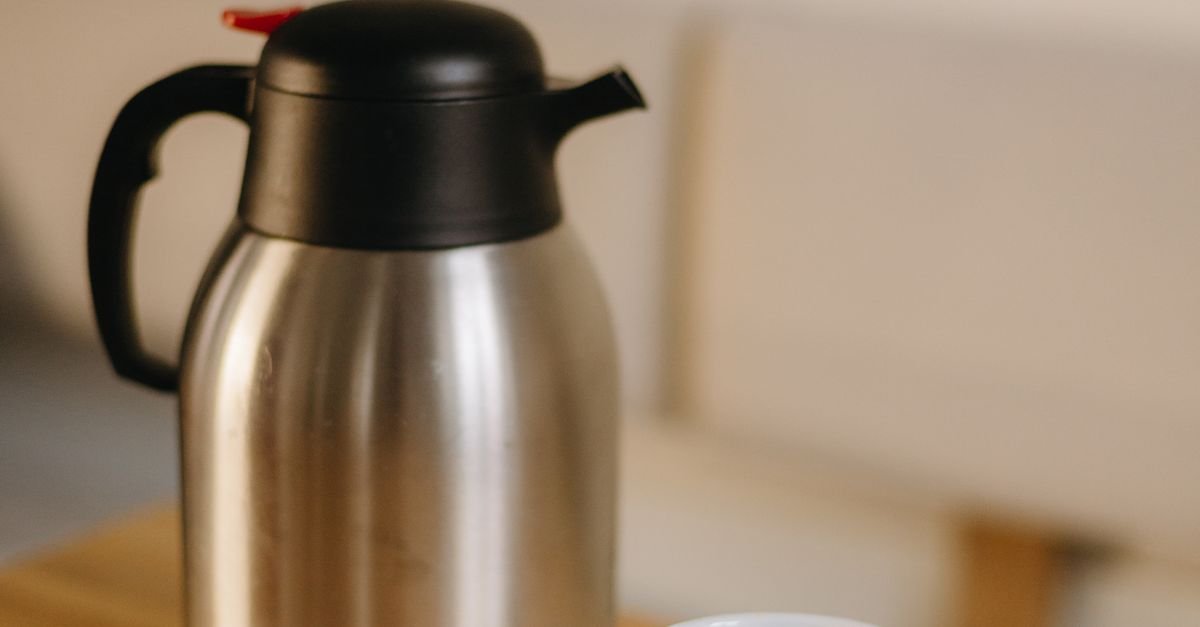
A thermal carafe does the opposite. Instead of adding heat continuously, an insulated vessel slows heat loss. Breville’s current Luxe Brewer Thermal uses a dual-wall thermal carafe and says it can keep coffee above 150°F for up to four hours. Moccamaster’s KBT uses a glass-lined stainless thermal carafe rather than a heater plate.
Six hours on a heater plate and four hours in an insulated carafe are not equivalent holding conditions. One continuously adds heat to the brewed coffee; the other reduces heat loss. That difference matters more than the headline duration.
Flavor changes over time are where the two approaches diverge most
Freshly brewed coffee does not remain chemically static after it enters the carafe. Aroma compounds dissipate, oxygen continues to interact with the beverage, and heat can accelerate changes in the cup.
The Specialty Coffee Association has specifically noted that prolonged heating causes volatile flavor loss and speeds chemical reactions in brewed coffee, using coffee held on a hot plate as a practical example. Its home-brewer certification requirements also say the receiving vessel should keep coffee between 80°C and 85°C during the first 30 minutes and, importantly, that the coffee should not increase in temperature because of the holding system during that period.
That does not mean every glass-carafe brewer ruins coffee quickly. Modern warming systems can regulate temperature much better than an old always-on hot plate, and many households finish a pot before extended holding becomes important. It does mean that if your normal routine is to sip from the same batch for several hours, a thermal carafe avoids the specific issue of reheating the pot from below.
Glass makes the remaining volume obvious
One understated advantage of glass is visibility. You can see whether there is one cup left or nearly a full pot without lifting the lid or judging the weight.
That matters in shared kitchens. Someone deciding whether to make another batch can glance at the pot instead of opening a sealed thermal carafe. It also helps during cleaning because staining, oils and residue are easy to see.
Thermal carafes hide the contents. That is not a serious flaw, but it changes the workflow. Some people become very good at judging the remaining volume from weight; others repeatedly open the lid, which also releases heat.
Thermal wins when the pot needs to leave the coffee maker
A glass carafe is tied closely to the brewer because the warming plate is doing part of the holding job. Move the pot to a breakfast table or home office and heat retention drops quickly.
A thermal carafe is built for exactly that situation. You can brew in the kitchen, carry the pot to a desk, meeting table or patio, and keep serving without running back to the machine. That can matter more than absolute temperature performance.
This is also why thermal carafes make sense in homes where one person wakes earlier than another. The first drinker can move the pot without leaving the brewer powered just to keep the second person’s cup warm.
Glass is lighter and usually easier to inspect
Thermal carafes contain more material: double walls, insulation, more complex lids and sometimes an internal glass lining. They tend to feel heavier than a simple glass pot, especially when full.
That extra structure also creates more surfaces to clean. A narrow thermal neck, brew-through lid or valve can be less convenient than a wide glass opening. If you add cream or sweetener directly to the carafe—which manufacturers generally do not recommend—the difference becomes even more noticeable because residues can reach lid channels and seals.
A glass carafe is usually straightforward: open, rinse, inspect, dry. If low-effort cleanup is the priority and you rarely hold coffee for long, that simplicity has real value.
Breakage changes the ownership calculation
Glass carafes can crack or shatter if dropped, struck against a sink or exposed to careless handling. Replacement glass carafes are often available, but compatibility matters; shape, lid design and drip-stop geometry can be model-specific.
Stainless thermal carafes are much more resistant to ordinary impact, although they can dent. There is one important caveat: not every thermal carafe is steel all the way through. Moccamaster’s current KBT carafe, for example, uses a borosilicate glass lining inside the stainless shell. That gives good heat retention, but it means the thermal carafe is not immune to internal breakage.
If your kitchen includes children, tight sinks, crowded counters or frequent carrying between rooms, physical durability may deserve more weight than the difference in holding method.
A warming plate adds one more thing to manage
Glass-carafe machines with keep-warm functions have an active hot surface after brewing. Better models include timed shutoff, but the plate still becomes part of the routine.
Breville’s Precision Brewer Glass manual warns that the heater plate becomes hot during Keep Warm operation and should not be used with a thermal carafe. Moccamaster similarly documents timed automatic shutoff on the KBGV Select.
This is not a reason to avoid glass. It simply means the brewer stays involved in the holding phase. With a thermal carafe, once the brewing cycle ends, the machine does not need to remain a heat source for the pot.
Small batches change the holding math
A thermal carafe loses a larger share of its heat when it starts cold or holds only a partial batch, so preheating the vessel can help. Glass systems can compensate with a heater plate, but that also means the plate has more influence over a smaller amount of coffee. If you usually brew only two or three cups in a large machine, check the brewer’s small-batch mode and holding behavior rather than relying on full-carafe claims.
The best choice depends on your serving window
| Your routine | Usually the better fit | Why |
|---|---|---|
| Most of the pot is served within 20–30 minutes | Either | Holding method matters less when the coffee does not sit long. |
| You drink one batch over several hours | Thermal | Insulation avoids continuous reheating from a plate. |
| The carafe moves to a desk or dining table | Thermal | Heat retention travels with the carafe. |
| You want to see how much coffee remains | Glass | Transparent carafe makes volume immediately visible. |
| You prioritize simple cleaning and inspection | Glass | Fewer lid and insulation components. |
| Breakage is a major concern | Thermal, with caveats | Steel exteriors tolerate impact better, but check whether the model has a glass liner. |
Do not let carafe type distract from the brewer itself
The carafe affects holding, but it does not fix weak brewing performance. Water temperature, contact time, showerhead distribution, basket geometry and batch-size control all happen upstream.
A mediocre brewer with a thermal carafe is still mediocre at brewing. A strong glass-carafe brewer can make excellent coffee if you drink it while it is fresh. If you are comparing two machines, first ask whether both can brew the coffee the way you want; then use the carafe to break the tie based on your serving routine.
- How long does a normal batch last? Twenty minutes and three hours are different use cases.
- Where is the coffee served? Beside the brewer favors glass; away from it favors thermal.
- How much do you brew? Full batches retain heat differently from half batches.
- How much cleaning complexity will you tolerate? Thermal lids can have more parts and seals.
- Is breakage likely? Check the actual carafe construction, not just whether the exterior is metal.
- Does the brewer itself meet your needs? Carafe design should not compensate for poor extraction control.
If you are comparing several kitchen appliances at once, the BestByNeed Finder is the better place to start from your actual constraints. The Buying Guides library also keeps BestByNeed’s decision-first articles together as this kitchen and coffee cluster grows.
The right carafe is the one that matches what happens after the brew finishes.
Glass makes sense when coffee is served quickly, visibility matters and you appreciate a simple vessel. Thermal makes more sense when one pot has to stay useful through a long morning or move away from the brewer. The choice is less about which material sounds premium and more about your real holding time, serving location and tolerance for cleaning, breakage and hot-plate dependence.
Key references checked for this guide: Specialty Coffee Association home brewer requirements, SCA discussion of prolonged heating and coffee volatiles, Moccamaster KBT, Moccamaster KBGV Select support, Breville Luxe Brewer Thermal, and Breville Luxe Brewer Glass. Featured photo: Pexels photo 12912056.