A self-cleaning litter box can look safer than a traditional tray because it has weight sensors, infrared detection, anti-pinch features and app controls. But for a small kitten, one specification matters before almost everything else: the exact minimum weight the manufacturer allows for automatic operation.
That number is not universal. Current automatic litter boxes use different detection systems and different thresholds. Some manufacturers allow automatic cleaning at about 2.2 lb, while others set the threshold around 3–3.3 lb and recommend a manual or semi-automatic mode below it. The practical lesson is simple: “kitten mode” is not a substitute for reading the exact rules for the exact machine.
Disclosure: BestByNeed may earn a commission from qualifying purchases made through some retailer links. Affiliate commission does not affect recommendation scores or verified product facts.
Minimum weight is a detection rule, not a marketing detail
Automatic litter boxes need to know when a cat has entered, when it has left and whether it has returned during a cleaning cycle. Weight sensing is one common part of that system. If a kitten is lighter than the manufacturer’s stated threshold, the machine may not be allowed to run unattended in automatic mode even if the kitten can physically climb into the box.
This is why the BestByNeed automatic litter box buying guide treats minimum cat weight as a separate buying criterion from entrance size, enclosure design and overall cat fit. A machine can be physically roomy enough for a kitten while still requiring automatic cleaning to stay disabled.
Current kitten thresholds vary more than shoppers may expect
The table below uses current manufacturer guidance available in September 2026. These numbers should be rechecked against the manual or support page for the exact model before use, because manufacturers can revise firmware, safety instructions or product generations.
| Model | Manufacturer guidance for small kittens | What happens below the threshold |
|---|---|---|
| Neakasa M1 Plus | Automatic mode from 2.2 lb (1 kg) | Use Kitten Mode; automatic cleaning is disabled and cleaning is started manually when the kitten is not inside. |
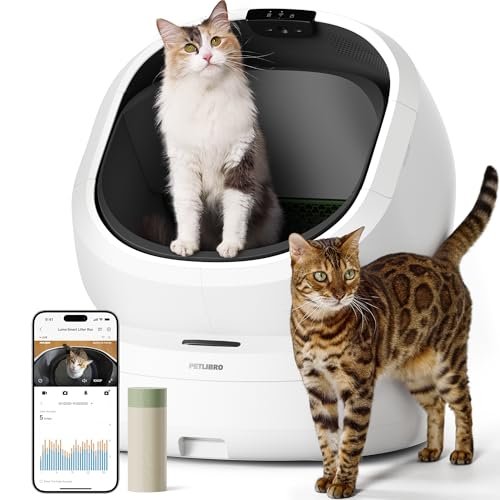
| PETLIBRO Luma | Works best from 2.2 lb (1 kg); manufacturer also flags cats under 6 months | Turn off auto clean and use the cleaning button manually. |
| Litter-Robot 4 | Automatic mode from 3 lb | Whisker recommends a semi-automatic routine with the unit powered off between supervised cleaning cycles. |
| PetSnowy SNOW+ | Automatic mode from 3.3 lb | Disable automatic cleaning and initiate cleaning manually after confirming the kitten is outside. |
| PETKIT Purobot Max Pro 2 | Manufacturer does not recommend automatic use below 3.3 lb (1.5 kg) | Kitten Protection Mode disables automatic and periodic cleaning. |
Those differences are large enough to matter when you are shopping for a growing kitten. A 2.5 lb kitten may meet one model’s automatic-mode threshold while remaining below another model’s. That does not prove the lower-threshold machine is “safer” overall. It only tells you what that manufacturer permits for automatic operation.
“Kitten mode” often means less automation, not extra detection
The label can be misleading if you assume it makes a small kitten easier to detect. On several current models, kitten protection works by doing the opposite: it turns off automatic cycling.
Neakasa says kittens below 2.2 lb should use Kitten Mode, which prevents automatic cleaning. PETKIT says its Kitten Protection Mode disables auto cleaning and periodic cleaning for undersized kittens. PetSnowy instructs owners of kittens below 3.3 lb to deactivate automatic cleaning and trigger a cycle manually. Whisker’s guidance for a Litter-Robot 4 kitten under 3 lb is similarly conservative: keep the unit powered off, wait after use, then run a supervised clean cycle.
That pattern is useful when comparing products. If you have a very small kitten, ask whether the machine gives you a practical manual-cleaning path while automatic cycling stays locked out. The feature to look for is not just a badge called Kitten Mode; it is a clear manufacturer procedure that tells you exactly which automatic behaviors are disabled.
Multi-cat homes create the hardest kitten scenario
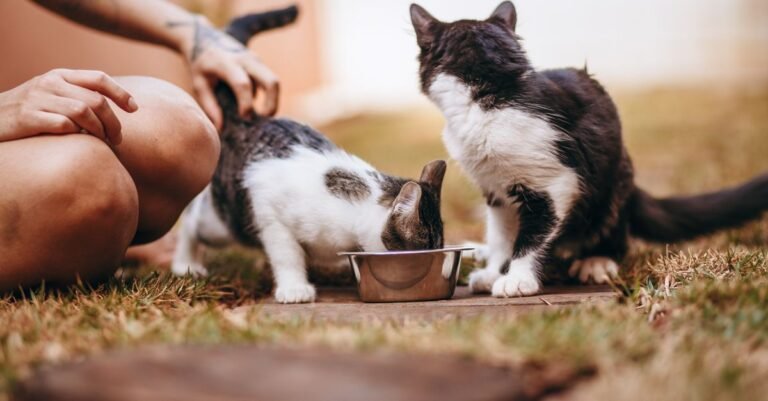
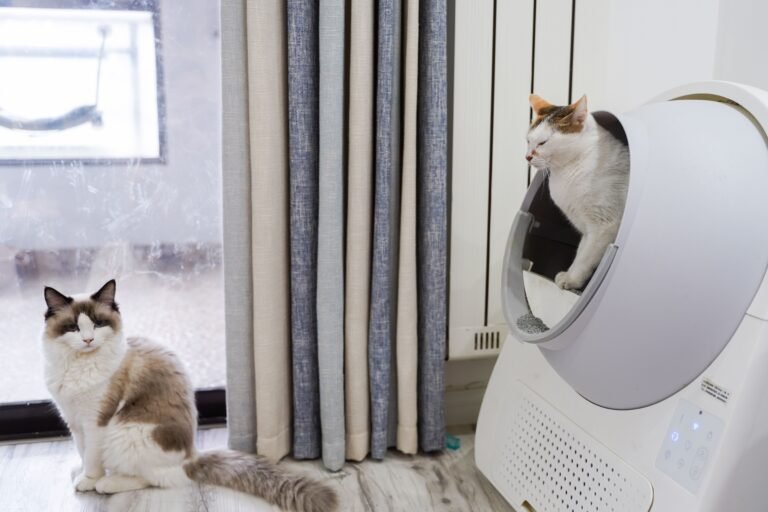
The awkward case is a household with an adult cat that easily meets the weight threshold and a kitten that does not. The adult cat may be perfectly suitable for automatic operation, but the smaller animal changes the safety decision for the shared machine.
If the manufacturer requires automatic cleaning to remain disabled for the kitten, the adult cat does not cancel that requirement. A curious kitten can approach the box after the adult leaves, investigate a moving drum or enter during a cycle. In that situation, the household should follow the strictest applicable instructions until every cat using the machine meets the stated conditions.
This is one reason our guide to automatic litter boxes for multiple cats emphasizes re-entry behavior and sensor response rather than only waste-bin capacity. Back-to-back visits are common in shared homes, and the lightest cat—not the largest—can determine whether unattended automation is appropriate.
Weight is only one part of kitten suitability
A kitten can meet the minimum weight and still be a poor fit for a particular box. Entry height, floor stability, enclosure shape, noise and litter compatibility remain separate questions.
For example, BestByNeed records the Neakasa M1 Plus at a 35.2 cm entry step height. Its open-top layout may feel visually accessible, but that does not automatically make the physical climb easy for every small cat. The PETKIT PuraMax 2 has a much lower recorded entry step of 20 cm, but it uses an enclosed front-entry design. If you are deciding between those layouts, our open-top vs enclosed automatic litter box guide explains why entry geometry and enclosure preference should be evaluated separately.
Litter also matters. Small cats may already be transitioning between litter types, and automatic machines can impose granule-size or clumping restrictions. Before changing both the box and the litter at the same time, check the machine’s requirements. The BestByNeed guide to automatic litter box litter compatibility compares why clay, tofu, crystal and pellet-style litters are not interchangeable across machines.
Placement can affect weight sensing
Manufacturer guidance also shows that sensor performance depends on setup. PetSnowy tells owners to place SNOW+ on a hard, flat surface because soft flooring can affect its weight sensors. PETKIT similarly tells users of current Purobot models to keep the unit on a hard, level surface and clear of obstructions around the entrance.
That means a model’s minimum-weight specification only makes sense when the machine is installed as instructed. A mat trapped under the base, thick carpet, an uneven floor or the machine touching nearby furniture can undermine the assumptions behind weight measurement. For a kitten close to the minimum threshold, careful setup matters even more.
A safer buying checklist for a growing kitten
- Check the exact minimum weight for automatic mode, not just the product’s general cat-weight range.
- Look for explicit instructions for kittens below that threshold.
- Confirm whether Kitten Mode disables automatic cleaning, scheduled cleaning, remote cleaning, or all three.
- In a multi-cat home, apply the restrictions required for the smallest cat that can access the machine.
- Check entry height and physical access separately from sensor eligibility.
- Place the unit on the surface type required by the manufacturer.
- Watch real cleaning cycles during the transition instead of assuming app setup proves detection is working correctly.
The buying decision should change as the kitten grows
An automatic litter box can still make sense for a kitten household even when you cannot use full automation on day one. The key is choosing a machine whose temporary manual mode is acceptable and whose adult-cat fit will still work months later.
Do not buy only for the kitten’s current size. Consider the expected adult body size, entrance dimensions, usable interior space, litter preferences and whether you will eventually have multiple cats sharing the unit. For cats expected to become large adults, the large-cat automatic litter box guide covers the measurements that matter after kittenhood.
If you want to compare models around your actual constraints, start with the BestByNeed Finder. Enter the cat’s current weight, expected adult size, home setup and must-have safety or access requirements, then compare the verified trade-offs instead of treating “kitten friendly” as a yes-or-no marketing label.
The safest conclusion is also the least exciting one: for a kitten, the exact manufacturer threshold and operating instructions matter more than the number of sensors printed on the box. Automation is useful only when the smallest cat in the home can be detected under the conditions the manufacturer actually supports.