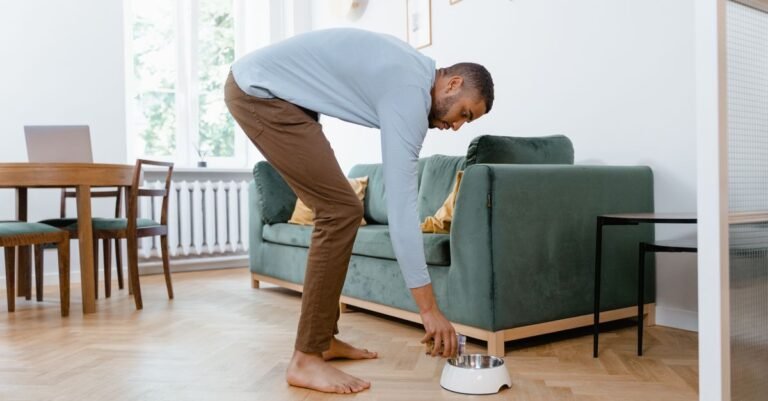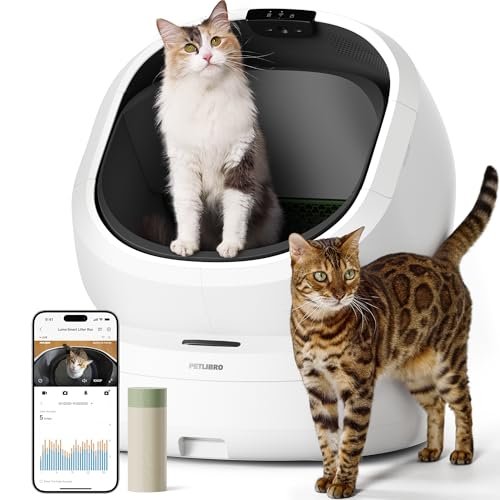
For a senior cat, the most important automatic-litter-box feature may be the one that rarely gets the biggest headline: how the cat gets in and out. A machine can have excellent sensors, odor control and a large waste drawer, yet still be a poor fit if the entrance asks an older cat to climb higher, balance on a narrow step or squeeze through a doorway it has started to find uncomfortable.
For senior cats, start with access rather than automation. Compare floor-to-entry height, step depth, ramp options, traction, usable interior room and how easily the cat can turn and leave. A lower entrance can be helpful, but a well-designed ramp can sometimes make a taller machine workable. If your cat has arthritis, weakness, house-soiling or a sudden change in litter-box behavior, treat that as a health question as well as a shopping question.
Age changes the buying question
When a cat is young and athletic, a raised litter bed can look like a minor inconvenience. Later, the same step can become the part of the machine that matters most.
The Feline Veterinary Medical Association’s senior-cat guidance specifically suggests a litter box with a lower entry so older cats can get in and out more easily, and notes that steps or ramps can improve access to important areas. International Cat Care gives similar advice for cats with osteoarthritis or mobility problems: provide an indoor litter tray with at least one low side and enough room to move comfortably.
Those recommendations were not written specifically for self-cleaning machines. That is exactly why they are useful. They remind us that automation does not cancel the basic physical job the cat still has to do: approach, step in, turn, posture, dig and step back out.
If you are still deciding whether an automatic box makes sense at all, start with the broader BestByNeed automatic litter box buying guide. For an older cat, I would move access geometry near the top of that checklist.
Entry height is more useful than the outside height of the machine
The total height of an automatic litter box tells you almost nothing about the climb your cat actually makes. What matters is the vertical distance from the floor to the surface the cat must reach, plus the shape and stability of any intermediate step.
| Current model | Verified access detail | Why it matters for a senior cat |
|---|---|---|
| Litter-Robot 4 | Whisker lists a 6.9-inch step height and a 15.75-inch square entryway. | The basic step is relatively modest, and Whisker offers a dedicated ramp for kittens, seniors and cats needing extra help. |
| PETKIT PuraMax 2 | PETKIT lists a 7.87-inch (200 mm) entrance height. | PETKIT also sells an Easy-Step Pedal marketed for smoother entry and exit for short-legged and senior cats. |
| Neakasa M1 Plus | Neakasa lists a 13.86-inch (352 mm) entry height. | The open-top layout gives visual and headroom openness, but the climb itself is substantially higher unless a step accessory is used. |
These measurements do not rank the machines. They show why the phrase “easy access” needs a number behind it. A senior cat that comfortably handles an eight-inch step may not care. A cat that has started hesitating at a sofa, stair or conventional high-sided litter tray may care a great deal.
A ramp can solve one problem and create another
A ramp is often the obvious fix for a high entrance, but it changes the machine’s footprint and the way the cat approaches it.
Whisker’s current Litter-Robot 4 ramp is designed to give a gentler approach and a non-slip surface. The important ownership detail is space: Whisker says the Litter-Robot 4 footprint grows from 22 by 27 inches to 22 by 38 inches with the ramp installed. That extra depth may be trivial in a laundry room and impossible in a narrow bathroom.
Neakasa offers step bundles for the M1 family, with current accessory options roughly 6 to 6.5 inches high at the rear. PETKIT’s Easy-Step Pedal measures 4.35 inches high and is designed to reduce the effective climb into compatible machines such as PuraMax 2.
When a senior cat needs a ramp or step, treat the accessory as part of the product dimensions. Measure the full approach path, including room for the cat to stand in front of the ramp, turn around and leave without being forced against a wall, cabinet or door.
Traction matters almost as much as height
A shallow step is not automatically easy if the surface feels slippery. Older cats with reduced strength or joint discomfort may be more cautious about placing weight on a smooth plastic surface, especially when litter dust has accumulated on it.
This is one reason purpose-built ramps often use textured surfaces or anti-slip feet. The goal is not only to lower the vertical climb but to give the cat a predictable surface under its paws. A loose household stool may have the right height while still moving slightly when the cat steps on it.
If you add an aftermarket step, make sure it cannot slide, tip or interfere with the machine’s sensors, drawer or moving parts. Manufacturer accessories are not always necessary, but improvised access should not make the litter box mechanically less stable.
Open-top can feel roomy while still being physically difficult to enter
Senior-cat shopping is a good example of why one design label should not decide the purchase.
An open-top machine such as the Neakasa M1 Plus removes the roof and can give a cat more visual openness. That may suit a cat that dislikes enclosed toilets. But its listed 13.86-inch entry height is a separate variable. An enclosed machine can have a lower entry even though the interior feels more contained.
Our guide to open-top versus enclosed automatic litter boxes goes deeper on that trade-off. For a senior cat, I would decide in this order: can the cat reach the litter comfortably, can it stand and turn comfortably once inside, and only then which enclosure style it appears to prefer.
Interior room still matters after you solve the step
A ramp gets the cat to the doorway. It does not solve a cramped interior.
Older cats can become less flexible through the spine, hips and knees. A cat that used to pivot tightly may start making a wider turn or avoiding positions that require twisting. This is why usable interior space, doorway dimensions and litter-bed shape still belong in the decision.
The principle overlaps with our automatic litter box guide for large cats, but the reason is different. A large cat needs room because of body dimensions. A senior cat may need room because tight turning or crouching has become less comfortable. Some cats are both large and old, making both constraints relevant at once.
Smart monitoring cannot rescue poor physical fit
Visit and weight tracking can be useful with an older cat, but only if the cat uses the machine willingly. Do not turn litter-box data into a diagnosis, either: sudden avoidance, house-soiling, straining, vocalizing or a new mobility change deserves veterinary attention rather than another accessory.
Keep a conventional low-entry box during the transition
Replacing the old box immediately makes it harder to tell whether the senior cat actually accepts the new setup. A better transition gives the cat a choice.
Leave the familiar low-entry tray available while the automatic machine is introduced. Keep the new machine stationary at first if the manufacturer allows that setup, use familiar compatible litter when possible, and avoid forcing the cat through the entrance. Watch the route the cat chooses rather than just whether it eventually uses the machine.
If the cat consistently chooses the conventional tray, compare the two environments. Is the old tray lower? Wider? Quieter? Easier to turn in? Closer to the cat’s preferred resting area? The answer can reveal whether the problem is automation, access or location.
Automation still has to remain easy to live with. Our guide to automatic litter box maintenance covers the chores that remain; for a senior cat, include the ramp, step and surrounding floor in that routine so the access path stays clean and non-slip.
A practical senior-cat buying test
Before choosing a machine, watch your cat use its current tray and move around the home. You are looking for clues about the movement the new box will require.
- Approach: Does the cat walk directly to the tray or pause before stepping over the side?
- Climb: Does it avoid furniture, stairs or windowsills it used to reach easily?
- Turning: Does it need more room to circle before eliminating?
- Exit: Does it jump out confidently or step out one paw at a time?
- Surface: Does it hesitate on slick floors but move normally on rugs or textured surfaces?
- Location: Is the tray on the same floor where the cat spends most of its time?
Those observations are often more useful than a generic label such as “senior friendly.” They tell you which measurable product attributes deserve priority.
When an automatic litter box is not the right upgrade
A large conventional low-entry tray can be the better answer when every automatic option that fits your room still requires an awkward climb or cramped turn. That is not a failure of technology. It is simply a case where the cat’s physical access matters more than eliminating the scooping chore.
The same is true when you need multiple litter stations on different floors. International Cat Care recommends accessible trays on all floors for cats with mobility problems. One expensive automatic unit in a distant room may be less useful than several easy-to-reach conventional boxes placed where the cat actually spends time.
If automation still fits your cat’s movement and your home, use the BestByNeed Finder to compare current models around the constraints that matter: entry height, enclosure design, cat-weight range, litter compatibility, maintenance access and the safety features you consider essential.
For a senior cat, the best automation begins with an easy step.
Do not start with app features or waste capacity. Start at floor level. Measure the entrance, account for any ramp or step, check traction, make sure the cat can turn comfortably and keep a low-entry alternative available during the transition. If the machine makes toileting physically harder, automatic scooping is solving the wrong problem.
Manufacturer and care references checked for this guide: Feline Veterinary Medical Association senior cat guidance, International Cat Care home modifications guidance, Whisker Litter-Robot 4 Ramp, Whisker Litter-Robot 4 specifications, Neakasa M1 Plus specifications, Neakasa M1 Plus step bundle, PETKIT PuraMax 2 specifications, and PETKIT Easy-Step Pedal.